
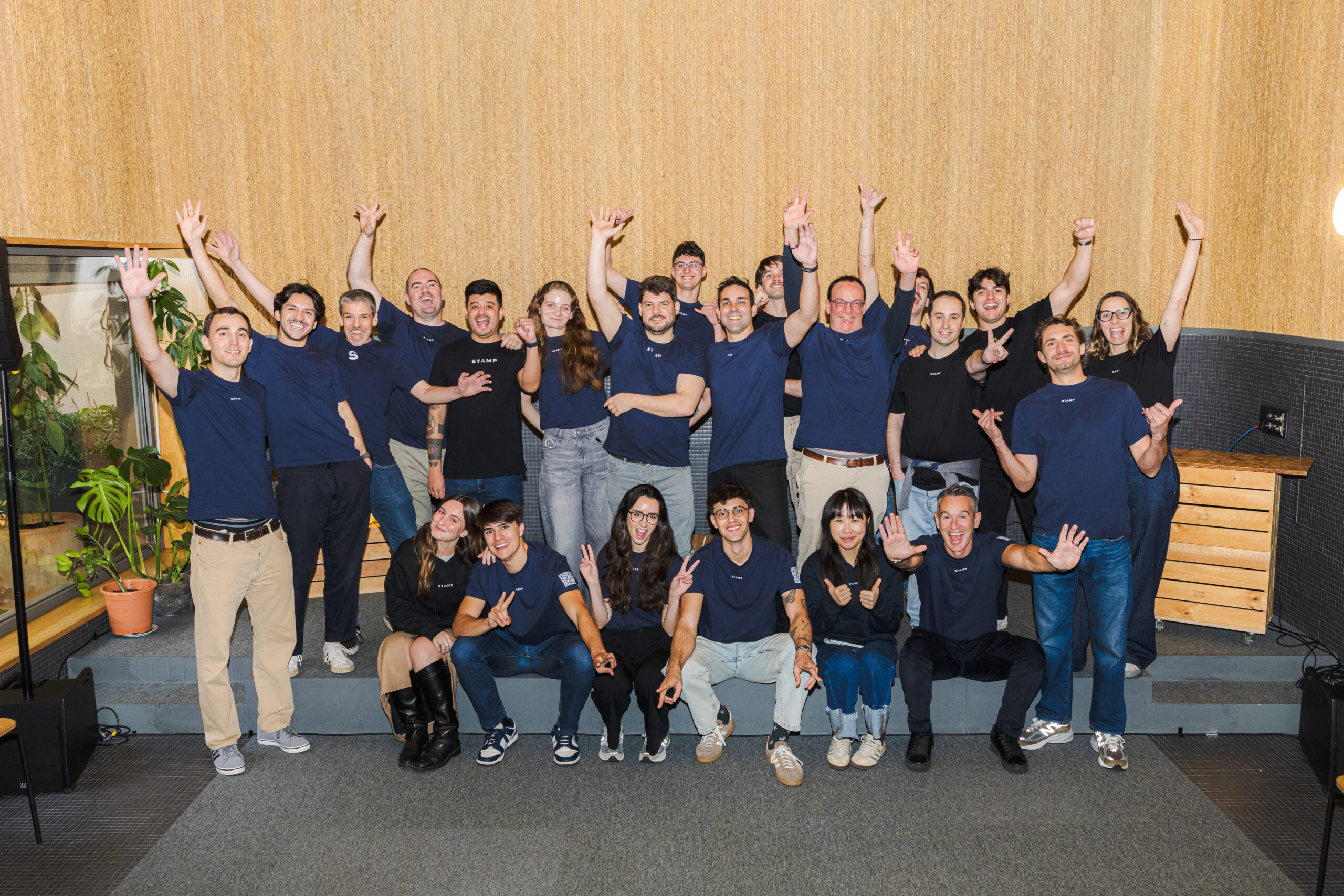


The Spanish fintech announced on Monday that it has received a €4 million investment aimed at globally modernizing the TaxFree industry.
With these significant funds for the growing startup, STAMP will further its mission and strengthen the development of new technological products, including AI-based services.
The round was led by Dozen, with participation from EBISU Digital, FC Barcelona’s investment vehicle, Barça Innovation Hub, as well as several international business angels such as Andreas Mihalovits and Real Madrid goalkeeper Thibaut Courtois, through his investment arm NXTplay, according to a press release from STAMP.
The capital raised will be used primarily to accelerate the company’s expansion in the markets where it currently operates: Spain, Italy, and Portugal. There is also talk of allocating resources to product development, with a special focus on more advanced international payment solutions and the launch of a new product based on artificial intelligence.
“This round allows us to execute our roadmap with greater determination and strength. Our goal is clear: to fulfill our mission by empowering retailers in southern Europe to serve global customers, eliminating friction in the payment process and activating tax-free shopping as a real purchasing incentive for consumers,” said Abel Navajas, CEO of STAMP.
In addition to private capital, STAMP has already been granted public funding from the Ministerio de Industria y Turismo, Ayuntamiento de Valencia, the Community of Madrid, and Ayuntamiento de Madrid.
Turning Tax-Free into a sales driver
Shopping tourism in Europe has rebounded in recent years, with destinations such as Spain showing particularly strong growth (around 26% annually in tax-free purchases) and consolidating its position as the third European destination in this segment, after France and Italy.
This growth, driven by international customers, has highlighted the need to eliminate friction at the critical moment of payment to convert visits into actual sales and improve the traveler experience.
Unlike the traditional VAT refund system, based on complex post-purchase refund processes, intermediaries, and opaque commissions, STAMP has developed a technological model that activates the tax benefit at the point of sale itself, integrating it into the payment experience digitally and in accordance with European regulations.
In markets where regulations allow it, such as Italy, purchases can be made directly VAT-exempt at the point of sale. In other countries, such as Spain, the invoice is always issued with VAT, but the customer obtains an immediate discount equivalent to the value of the tax at the time of payment, activating their tax-free entitlement.
For the security of retailers, the platform subsequently validates the transaction, ensures its correct traceability, and manages the recovery of the amount, even in cases of fraud, so that the retailer can be reimbursed by the relevant tax authority without assuming any tax risk.
“Tax Free, as it has been applied until now, has operated more as an administrative procedure than as an automatic consumer right. When that friction is removed, customer behavior changes, and the retailer regains control over the shopping experience and its margin,” says Navajas.
Its Real Tax Free platform, combined with payment methods, is a clear commitment to modernization, which has led the company to establish itself as a strategic marketing and payments partner of giants WeChat and Alipay.
STAMP was founded in 2024 with the mission of empowering retailers to serve global customers by eliminating payment friction and activating customer tax-free (tax rights). Today, the company is headquartered in Madrid and Milan and has a technology hub in Valencia within Lanzadera, an ecosystem of companies and startups promoted by Juan Roig, president of Mercadona.
Through its technology suite, it connects European retailers with international travelers, creating instant, transparent, and frictionless shopping experiences.
With this operation, STAMP strengthens its position as one of the most relevant emerging technology platforms in the field of global commerce, international payments, and tax-free activation in Europe.
“We have opted for a different type of investor than traditional VC: partners who, in addition to providing capital, are actively involved in our mission and contribute to accelerating the adoption of the solution in the market,” concluded the CEO, also highlighting the presence of EBISU, an investment boutique focused on fintechs such as MyInvestor, Flanks o Flinket, and Dozen, the Orbyn group’s participatory investment platform, with a track record of investing in companies such as Glovo and scaleups such as Cuideo.