



Donald Trump’s constant attacks on Spain and his threats to cut off trade between the two nations paint an increasingly uncertain picture for Spanish entrepreneurs seeking to break into Silicon Valley.
Added to this is the fact that immigration restrictions have tightened, meaning that visas for skilled professionals have fallen sharply as the debate on immigration once again takes centre stage in US politics.
The consequences of these shifts are clearly evident in recent statistics. According to Brookings Institution projections, 2025 marked the first instance in almost fifty years where the U.S. experienced negative net migration, signaling a turn toward much tighter immigration controls. Simultaneously, figures from U.S. Citizenship and Immigration Services (USCIS) reveal that qualifying H-1B visa petitions for the 2026–2027 cycle plummeted by 38.5% compared to the prior year.
Nevertheless, the reality of innovation reveals a starkly different narrative. Findings from the National Foundation for American Policy (NFAP) indicate that immigrants founded or co-founded 59% of American “unicorns —ventures that collectively command a valuation approaching 5 trillion dollars. When accounting for the children of immigrants, this proportion expands to 66%.
The contradiction is evident. While access to the country is becoming more difficult, a large part of the US tech ecosystem continues to rely on international talent to create the companies that drive its growth.
Furthermore, Spanish entrepreneurs appear determined to maintain their momentum and avoid being marginalized by these shifting trends.
Although the immigration landscape has changed, Spanish institutions continue to strengthen their presence in the world’s leading tech ecosystem.
One example is ACCIÓ, Catalonia’s agency for business competitiveness, which has maintained a permanent office in Silicon Valley since 2015, dedicated to helping Catalan companies establish themselves in the United States, connect with investors, find strategic partners, and facilitate international expansion.
Since it opened, the office has been involved in nearly 150 internationalisation projects for Catalan companies, establishing itself as one of the most reliable institutional channels for bringing Spanish start-ups to the US market.
Furthermore, recent data indicates that since 2023, 18 projects with at least one Spanish founder have passed through YC, considered the world’s largest start-up accelerator. However, only one company retains Spain as its main headquarters.
The bridge to Silicon Valley
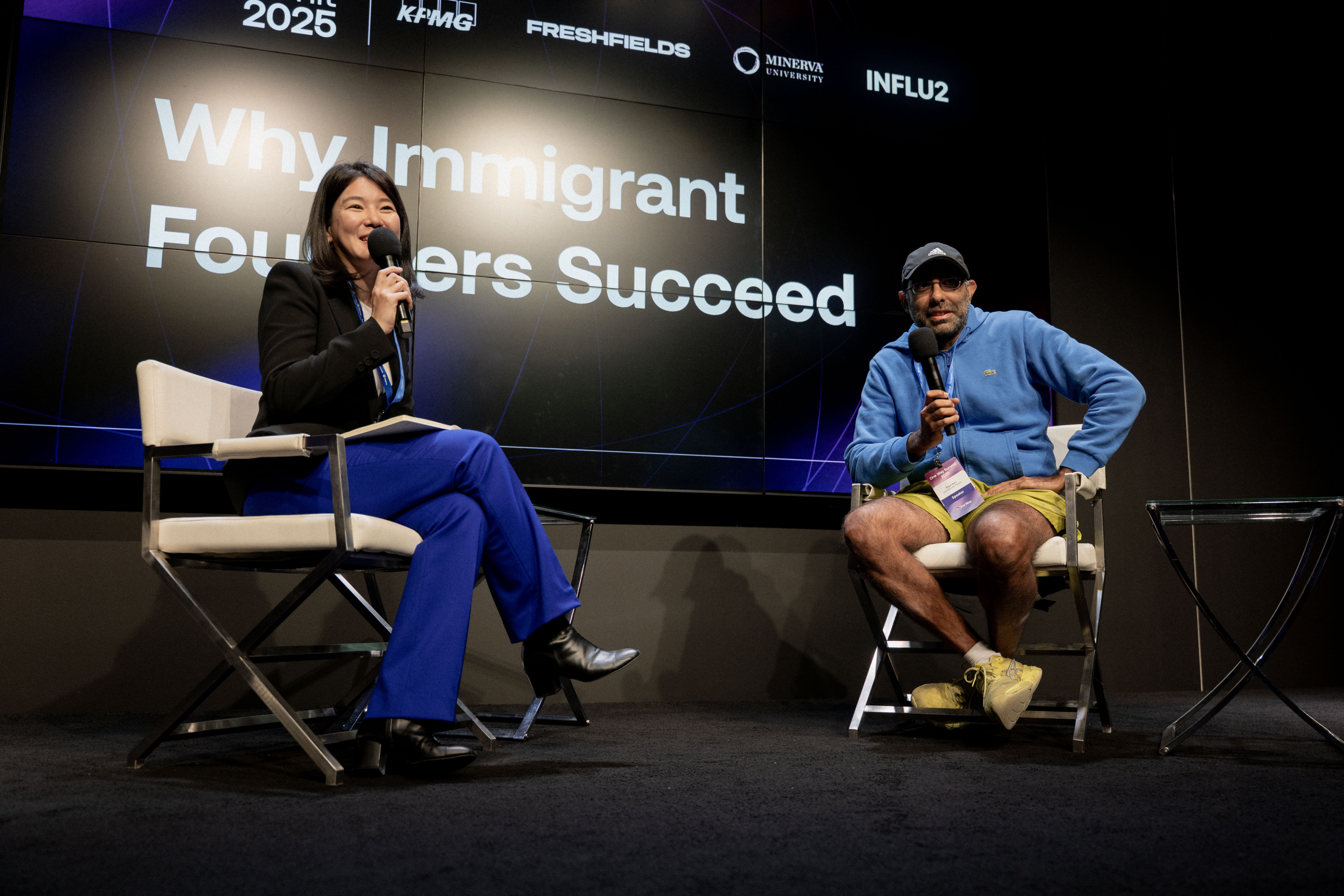
This work is also reflected in the One Way Summit, an event organised by One Way Ventures, which will hold its second edition on 28 and 29 October in San Francisco and is expected to bring together more than 1,000 entrepreneurs, investors, and technology leaders. ACCIÓ is among the ecosystem partners supporting the event, reinforcing its commitment to connecting Spanish entrepreneurs with US venture capital.
The Spanish presence does not end there. Among the first seven confirmed speakers is Anna Piñol, an investor at NFX and one of the rising stars of venture capital in Silicon Valley.
Originally from Barcelona, Piñol began her career as part of the founding team of Amazon Marketplace in Spain before moving to the United States in 2017 to study for an MBA at Stanford. She subsequently co-founded a start-up backed by Y Combinator and is now part of the team of partners at NFX, a fund that invests in start-ups in the US, Europe and Latin America.
Her career path epitomises the journey that many Spanish entrepreneurs are still seeking to follow: gaining local experience, making the leap to Silicon Valley and ultimately becoming part of the investment ecosystem that funds the next generation of tech companies.
At the Summit, he will share the stage with leading figures such as Vinod Khosla, founder of Khosla Ventures; Severin Hacker, co-founder and CTO of Duolingo; Cal Henderson, co-founder of Slack; Anna Makanju, Vice-President of Global Impact at OpenAI; Immad Akhund, founder of Mercury; Nicolas Dessaigne, partner at Y Combinator; and Juan Pablo Ortega, co-founder of Rappi and Yuno.
Europe seeks to retain talent, but Silicon Valley remains a magnet
Europe’s commitment to strengthening its own entrepreneurial ecosystem has gained momentum in recent years. Initiatives to increase funding, boost venture capital funds, and reduce dependence on the United States aim to persuade more founders to build their companies from Europe.
Even so, for many tech start-ups, the US market continues to offer advantages that are hard to match: broader access to capital, a higher concentration of specialised funds, and an ecosystem accustomed to funding companies with global ambitions.
Consequently, while immigration regulations create barriers to entry, platforms such as the One Way Summit demonstrate that the investment community remains constantly on the lookout for intellectual talent beyond U.S. borders. For Spanish founders, the path to success may be more complex than in the past, although there are still organizations, partnerships, and capital specifically dedicated to ensuring that the connection with the Silicon Valley ecosystem remains fully operational.